Showing posts with label fan. Show all posts

Thursday, September 2, 2010

The 3D People and Their Magical 2D World


If you're half as nerdy as me, you might have tried to write stories that take place inside your favorite video games. If you're really nerdy then the games in question are probably really obscure, and if that's the case then this probably isn't the blog for you.

I'm not talking about old video games like Pitfall or Pac Man (cough), but rather more recent games (circa 1990 at least). At first glance, a video game with a good story or good universe can be quite appealing to write about. If you remember games like Decent, Commander Keen, King's Quest, Space Quest and Cosmic Cosmo, then you're old enough to appreciate the tender deliciousness of games that helped stimulate the imagination of my childish mind.

Ur, childish because I was a child when those games came out. Literally childish.

You have to remember that most of those old games didn't have much in the way of story except maybe a screen or two of poorly-written narrative set in some grainy 16-bit font.

Even if I could have read the story, which I couldn't, I would have found a rather thin excuse to have the player collect the Red Key Card or kill snails or defeat Mordak. Well, King's Quest actually had a pretty good story. There was actually a pretty good reason to defeat Mordak.

Ahem.

As a young player of these games, I was interested in making the characters from the games have additional adventures. I wasn't trying to make an expanded universe or add impressive self-inserts of myself; I guess I just wanted new levels. I could kind of reach that goal via writing. It always turned out awful, but thad whad Id ecpect frm a chlid hoo culdn't spelle very well.

Fast forward to Christmas 2004 when my family finally got DSL and I got a new game for Christmas called World of Warcraft. You know where this is going.

Long story short, I played the heck out of the game, and eventually tried my hand at writing inside the universe. It's not the worst thing in the world; I'm definitely not the first person to try this kind of thing. After all, Warcraft has enough story to fill several hundred books and enough fans to fill a convention center.

Like at Blizzcon.
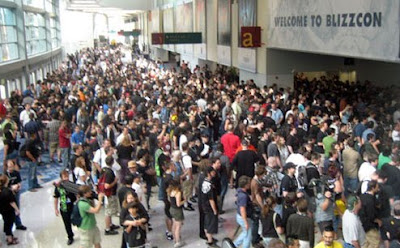

For anyone who has tried to write a story inside the universe created by a video game, there are a few things to know:

  1. The designers make gameplay decisions based on how fun they are, not on how accurate they are to real life.

  2. The world is sized to make it fast to walk from place to place, not to make it as big as a real planet.

  3. Everything is streamlined.

For a person trying to write a story inside the game, they're going to encounter these weird hurdles in their storytelling process. If I were just starting out writing a story, lets say it's in Warcraft and I set it in Stormwind, I'm not picturing a real city when I write; I'm picturing the city from the game, which is laughably small compared to a real city. There's no infrastructure. There's no economy; heck, there aren't even people living there.

Now let me just clarify: I don't want people saying, “you just like getting bogged down in the minute details of stupid crap like this, William! It's not relevant to the story!”

I'm not trying to say that you're supposed to add all of the boring things that I've just mentioned, but when you're picturing Stormwind, again, you're picturing the one in the game. If you want to write a more authentic story, you have to imagine a real medieval city, though one that contains magic and stuff. Lets make an illustration.

Lets say that I'm writing a story that's taking place inside a universe that I'm making up. It's completely my own. When I tell you that there's a huge city in the story called Whirlgate, the capital of the Highland nation of Men. It's built on top of a mountain and its buildings scatter down the cliffs, which have been quarried. As they descend the mountain, the buildings become smaller and smaller; the downtown area near the top gives way to residential hovels made of white stone toward the bottom. To keep the wind down, there is a massive twenty foot wall surrounding the entire city. It zigzags up and down the cliff in a strange, random-looking layout.

If your imagination is working properly (and if my writing isn't garbage), then hopefully you pictured something that might exist in the real world. Maybe it looked a little bit like something from Lord of the Rings, but still, it was real. When I say Stormwind you're going to be picturing that location in the game. Static. Polygonal. Video game. This is why I always prefer to make something up from scratch instead of fanficking myself into the corner.

To complicate matters, if your audience is also familiar with the game, they're going to picture the video game version of the city, no matter how flowery and descriptive your language is. This kind of thing happened to me when I read Howl's Moving Castle after seeing the animated feature; I couldn't NOT see the characters as Japanese animation in my head.

Though the movie is still fantastic.


I guess the point of all this is that I don't recommend writing stories inside games. I'm not saying to never do it; you might find you're quite good at it and that I'm full of hot air. If anything, it'll be a helpful learning experience that you can put toward your further writing successes.

(Also, since I didn't have anything Wednesday, I'm posting Friday's blog a few hours early as a sort of "please forgive me" bonus!)

Friday, July 16, 2010

Favorable Fan Fiction

In a response to Wednesday's post, my sister wrote this: “...fanfiction is a great way to get a person writing, and excited about writing. Eventually they should move on to original stories, and from what I've seen, most of them do.

I mean heck, Naomi Novik of the Temeraire books started out writing Sherlock Holmes fanfiction, and that way she got all the bad kinks out of her writing before she tried something original.

I avoid book fanfiction on principle, though. Videogames ... hey, you're writing a story based on a bunch of moving pictures. There's no writing style to rip off. But fanfiction of books ... there's a writing style to emulate, and nobody can do it well.”

I thought she made an excellent point, so I've decided to write something about the upside of writing this kind of stuff.

If you've read my post on Said and Adverbs then you've heard about my very first experiments with writing, which involved Command and Conquer. I've never really thought of it as fan fiction, but it is. It was good for me for several reasons; as my sister said above, it helps you get all of your bad writing, and hopefully bad habits out of the way. Because I was so young, there were many more terrible things that I had to write before I would even begin to figure out what I was doing (and I'm still learning).

If you were to travel back in time to meet me when I was writing these terrible C&C stories (give or take a few years), you'd also discover that I was writing another series of stories based on something altogether weirder, and that is Legos. Not just any legos, mind you, but the legos from the Lego Adventures playsets. Essentially the whole series was a thinly veiled copy of Indiana Jones, but since Lego didn't get the distribution rights from Paramount until 2008, us kids were stuck with Johnny Thunder. This was fine with me, because I didn't like Indiana Jones as much. I was about 10 at the time. I still remember trying to write the doctor (see: Sean Connery) character with a Scottish accent. I still remember all of the character names, mostly because I had the mini figures and (probably) all of the playsets.

If Lego's goal is to stimulate kids' imagination, they succeeded with me.

My adventures were never as sweeping and grand as I'd like, and usually wound up being unintentional rip-offs of scenes from Indiana Jones (instead of a pit of snakes, I had scorpions).

I don't know where I got the idea to write things in the first place; I wasn't a very good reader at the time, with a slow speed and low comprehension, but I still took it upon myself to enrich the world of literature. The stories were only a dozen pages long, hand-written in the sort of tiny notebook that people keep next to their telephone. But what else was I going to do for the days-long car rides to Oklahoma? (I'll explain more of that in another blog.)

What I learned from this writing was:

Writing takes a long time, and usually what you write seems much shorter than it did when you were writing it

If your character dialogue sounds bad even when you're ten years old, it's probably bad

There's nothing to do in Oklahoma except write stories about your favorite toys, and then reading said stories and longing for said toys

I didn't really get into writing until I read the first few Harry Potters, at which point I decided I rather liked this “reading” thing. That was when I started seriously trying it out.

How is this related to fan fiction?

Instead of making up my own stories, almost everything I wrote was based on whatever I was playing on the computer or on the Sega Genesis, Sega Saturn or Dreamcast.

My older sister wrote tons of stories based on some old Sega Games, which you might remember as Sonic the Hedgehog. I was always fascinated with how she was able to put so much depth into characters who had been created to sell cartridges. She put more thought and love into her characters than Sega ever had, and even more still than those brain-deads who created those awful Sonic cartoons.

I didn't want to write Sonic stories, though. I did the next best thing; Pac-Man.

That's as much information you're getting on the matter.

I also tried to write stories based on a series of children's detective books that I had. They weren't mystery novels; they were novelty “How To Be A Detective” booklets targeted at kids of my age demographic. I don't know why I loved them so much, but I wrote many a story involving the handful of example detectives.

Anyway, my sister built a sort of community with other people who loved Sonic the Hedgehog and wrote stories of their own. One of her writer friends whose name I don't remember sent her a story that she said was Very Good. She sent it to me and I read it. Sure enough, it was Very Good.

Aside from my sister's stories, I didn't know that anyone could write something about something so (seemingly) shallow and bring so much depth to it. His characters were textured, his Sonic was just right and his minor characters struck a balance between being hilarious and tragic. What impressed me was the way he had invented his worlds. Things that not even the Sonic videogames themselves dared attempt: Arachnid cities filled with talking bureaucratic tarantulas, an entire city based around drugging its inhabitants, a city in the sand that didn't seem remotely like Egyptian mythology.

For the record, I dislike reading things on a computer screen, especially in the dark. But I read that whole gosh-darn thing on my flickering CRT monitor, and I loved it.

The point of this entry is this: Fanfiction isn't a bad thing. I know in Wednesday's post I made it sound like it was the Devil's Own but there can be some really great stuff generated by a writer with a deep affection for an existing series. Highlights of good fanfiction are this:

• It takes an established franchise and expands on it without feeling forced or unnatural

With the change of a few character and location names, the story could stand on its own free of copyright claims

• It brings something out of the original work that you wouldn't normally thought about


Thanks Kess!

Wednesday, July 14, 2010

Fan Fiction Follies

As a new writer, the first thought of some people is that their story is going to be filled with riveting characters, plot twists, amazing and imaginative new things and that everyone will want to read it.

The truth is that the first story is going to be at least a little painful. I can speak from personal experience, because I've written many of awful things.

You don't want to bog yourself down with an overly large world. I think this is why some people are genetically predisposed to writing fan fiction based on their favorite books, movies or games. The logic goes like this:

It's actually quite a lot of work to invent a universe by yourself. It's much nicer if you can take an existing universe and just move in. Like a land squatter. You can even use your own characters.

Imagine that I really liked Harry Potter (which I do). If I liked it enough, and wasn't feeling particularly creative, I could start writing fan fiction inside the Harry Potter universe. I could make my own students attend Hogwarts. I could make up a few additional teachers, and they could have grand wizardly adventures together.

I'm not trying to speak out against fan fiction here, as I've read some (actually quite excellent) stuff by a handful of not-published internet writers.

The problem with most fan faction is almost like my adverb argument: This kind of thing sets you up for bad habits and failure.

In my new Harry Potter story, assuming I'm only the most casual of writers, my characters are probably going to take the form of the existing characters from those books. Lets say I loved Ron and Ginny. They're who my characters would be. All that I have to do is change the names and I'm golden.

My main character is, naturally, going to be either very much like Harry or very much like my own personality. This is called a self-insert or Mary Sue. I make Harry-me (or “Hairme”) talk to my version of Ron and Ginny the same way I would personally talk. Ron and Ginny, in turn, talk to Hairme the same way I would expect my friends to talk to me.

STOP.

This is a problem. At this point, I'm no longer writing a story; I'm writing what I would like to do in Hogwarts. This is just me hanging out with my friends, but with magic. It's a vacation; a fantasy. It's not what I set out to do. What happened to my compelling characters? What happened to the plot twists and exciting villains?

The problem might be that the basic structure of the story was too close to the original work. Harry's (probably) already done all of the things you set out to do, and worse still, he did it better. Instead of innovating a story, I've only created a bland retelling of it.

To make things more interesting, instead of students at Hogwarts, I could make my characters be muggles outside of Hogwarts who have finally realized something is up. I could bend the lore a little and explain what happened to the Unplottable spell on the school. Or maybe I could tell the story from the perspective of a teacher. Or from someone who actually didn't get into Hogwarts and is forced to find another means of education. Or set the story in one of the other magic schools mentioned in the original books. Durmstrang, anyone?

You don't need to make your characters have the same experience as Harry. In fact, if it were really my story, I'd steer clear of making the characters anything like J.K. Rowling's. The problem I foresee is that Rowling had so many minor characters with so many personalities that it would be hard to invent a new person without them seeming a bit like someone from Potter canon.

These are the sorts of reasons that I always avoid writing fan fiction if given the choice. Not only are you limited to the kinds of stories you can tell (Lord of the Rings fan fiction would certainly fall prey to this), but you're always in danger of retreading old ground. If you make your own universe you're completely free to do whatever you like.