Saturday, August 22, 2015

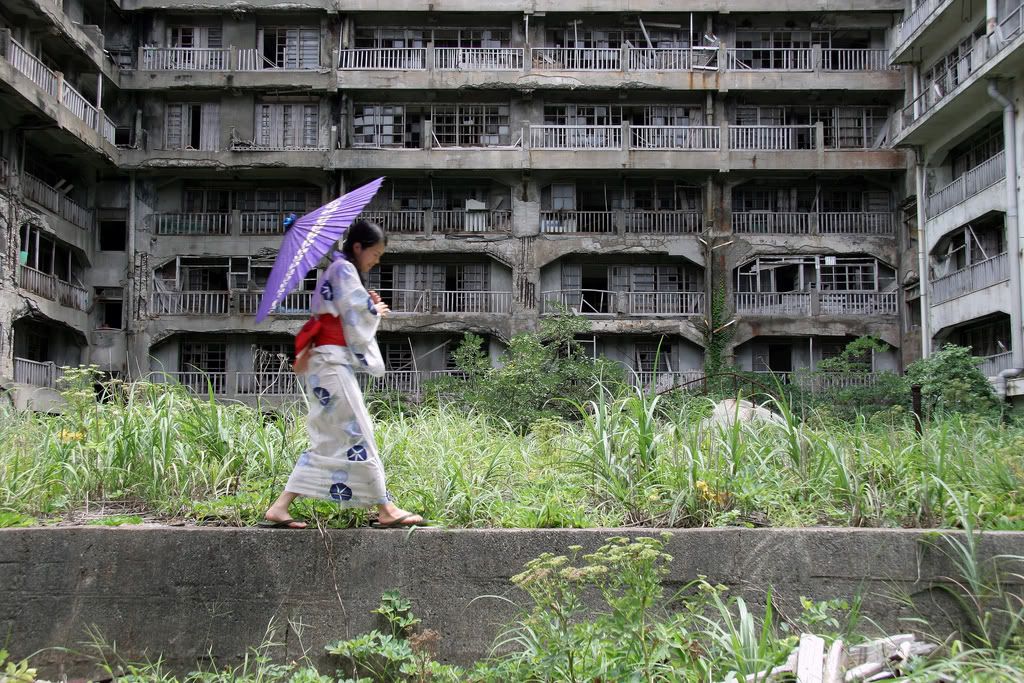
A Big, Empty Castle


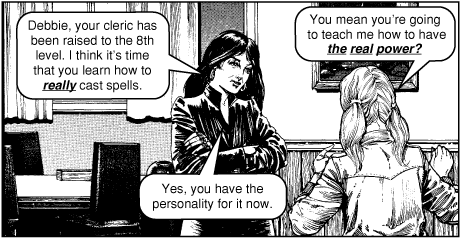
The main difference between video games and tabletop games (such as Dungeons and Dragons) is the concept of player freedom. Even the most open-world video games have constraints somewhere in them. Grand Theft Auto V's map has to end eventually, right? Whereas D&D can conceivably go on forever, assuming the Dungeon Master has enough brain and willpower to do so.

A few years ago, I thought this automatically meant that Dungeons and Dragons was better, at least from a conceptual standpoint. After all, what's better than infinite freedom? Nothing! When I first discovered tabletop RPGs, that fact impressed me to no end. I believed that if I were stuck on a desert island, I would only need my imagination and a few people to share it, and I'd be happy. Since then, my thinking has changed a bit, and probably not for the reasons you're thinking.

Player freedom is one thing, but I've really learned the importance of constraints. Here are two contrasting examples:

Example 1:
Players in D&D are rewarded a vast castle. Inside, they can possibly hire servants, craftsmen and hundreds of other cool things. Despite this, the players never really use it. They move on, uninterested. This is simply another huge asset, like a pile of gold, that they have collected.

Example 2:
Players in a video game (let's say Skyrim) are given a house as a quest reward. They can hire a servant, upgrade various stations in the house (like a blacksmith or alchemy table) and decorate the inside. The player returns to this house frequently to take advantage of its services.

So what's the difference here? After some careful consideration, I've thought of a few things.

Difference 1: Explicit Definition of Value
In Skyrim, the value of a player's house is made evident immediately. The game tells you "here is a single location for every crafting table in the game, and a place to store your stuff." In D&D, you're given a large chunk of undefined space to play in.
To put it in practical terms, if I gave you a big empty warehouse and said "do whatever you want," you probably would, at least initially, struggle to think of what to do. Conversely, if I gave you a small room with a trampoline in it, you'd immediately know what to do. It's not that the trampoline is better than a 20,000 square foot warehouse, it's that its function is immediately clear.

Nice and empty.
Difference 2: Player Creativity
In this world of video games, smart phones and tablets, people are very comfortable with constraints. Most people don't want infinite experiences, they wants Angry Birds. Give them something that's easy to understand and quick to play. The exception would be building games like Minecraft, where players really can do practically anything they want. But even Minecraft has constraints; you can't build infinitely high, or dig infinitely low. The experience is defined from the moment you punch your first tree.

People who have never played Dungeons and Dragons might struggled to create in the same way they might create in Minecraft. You're not building a castle one block at a time, you're creating vast concepts in just a few sentences. D&D is a game mainly about talking, and although neither Minecraft nor D&D has tactile feedback for a player, you can see what you're doing in Minecraft, whereas you have to imagine things in D&D.

If I said "build me a castle" in Minecraft, I know many people who could and would immediately build something very impressive, down to the smallest detail.

If the same thing was asked of D&D, people wouldn't start by describing exact length, width and height (well, maybe some people would). They would describe the surrounding lands, the Kingdom, and then hone in on how the castle looked in terms of a mood or tone.

"My castle shines like a beacon on the hill overlooking Barton Cliff. It's made of white stone, and the people inside are suffering under the reign of King Odin."

Difference 3: Explanation of Constraints
Unless you're a writer, it's difficult for Dungeon Masters to give high detail all the time. It doesn't matter how beautiful the opening paragraph is; as soon as a player asks to find a tavern, the GM has to quickly make up something. "It's called the Singing Shrew, and it stinks like old beer," is about as much description as you're gonna get.

It's a sketch more than anything.
Very quickly, a world in D&D can feel paper-thin as you travel into buildings that don't exist, talk to people who weren't defined a minute ago, and finding bonkers solutions to problems you created for yourself.
In many ways, the lack of constraints can be detrimental.

Let's look at Skyrim again. You know that if you travel into a building, there will be walls that you can't climb. There will be people there who you probably shouldn't kill, and objects you can steal. Everything is clearly and explicitly defined. It's a system of constraints that's immediately understandable and functional.

For a time, I was interested in adapting the Fallout universe into a tabletop RPG. The more I thought about it, the more I realized that what I like about the Fallout games isn't remotely the same as what I like to do in TTRPGs. For me, Fallout is all about being alone in a vast world, exploring the unknown and methodically sifting through piles of trash for small prizes.

It's probably not very enjoyable for other people to watch.

When I play D&D, what I enjoy most is making a character with a compelling story, interacting with the other players both in and out of the game, and solving problems in creative ways. I adore the discovery of the unknown, but not in the same way as Fallout. I know that in Fallout, every object was intentionally placed by a designer. In D&D, many, many encounters and rewards are randomized in some way, simply because it's really, really hard for a GM to both run a coherent game and track all of the minutiae behind the scenes.

Is this fixable?
I think that depending on the kind of game you want to run, the GM needs to be more intentional and explicit with the information given. You really shouldn't say, "here's a huge castle, have fun." You should say, here's a castle, and here's a sheet of paper describing how you can use it and what you can get from it. It doesn't have to be a detailed simulation of castle economics from the middle ages, but the GM should do something to make the world seem more understandable and clear. Otherwise it's just a sandbox with toys strewn hither and thither.

It call comes back to human psychology and whether or not a person feels creative in the moment. I've played games of D&D with people who would jump on that castle and start using it in ways that I never imagined. In this case, a list of constraints would limit that person and their creativity. It really all comes down to the group and the individual.

Sunday, September 7, 2014

Paying it Forward


It's been a while since I've written anything here, but today my wonderful Mom encouraged me to answer some stirring questions.

What am I working on?
These days my creative projects mostly have to do with work, but when I'm not making websites and editing commercials, I still enjoy writing in my spare time. Now, I've always had a bad habit of only writing candybar scenes instead of finishing stories. In spite of this, I've finished a few, both of which will never been seen by human eyes.

Currently I'm writing a short, funny fantasy story, a sci-fi epic that I have NO idea how to write and a piece of speculative fiction that reminds me of Lost or Flash Forward. In addition to that, I'm always writing adventures for an RPG game I play with my friends, namely one based in Star Wars.

I also aspire to write something with DC superheroes, but I'm not there yet.

Super Heroes are cool. Much like bow ties.


How does my work differ from others in this genre?
The biggest difference is that most authors can write and finish their stories, whereas mine often get stuck on the drawing board.

I once had an art teacher explain to me that if I learned to draw by creating cartoons, I'd never be able to draw realistically. Similarly, since most of my writing these days takes the form of tabletop roleplaying games, I've gotten into the terrible practice of spending all of my time on world-building instead of character building. There's a tremendously good show called The Legend of Korra that has both of these in spades. It's my current inspiration for vibrant characters, personal story arcs and satisfying storytelling in general. I don't mean to oversell it, but it's one of the best shows I've ever watched, and I majored in watching television in college!

(Among other things...)

Why do I write/create what I do?
I'm fascinated by the written word simply because it can do things that movies and TV cannot: It's better at expressing emotions and feelings. You can crawl inside someone's head for a while and think like someone else.

You see, there's this odd thing that I've never quite understood; when you read words on a page, it somehow translates into images and emotions in your mind. It seems ridiculous that such a thing can even happen. Words on a page translate into real, tangible things in my mind? I can experience something as fast or slowly as I like (based on how fast I read) and there's no moving parts! At least not on the page. Books are in essence, someone's ideas and thoughts frozen and preserved on a page, ready to be absorbed at any time. Odd.

The great tragedy of the modern age is that many (in fact most) people will live and die without ever taking pleasure in reading. I'm sad that they will never find joy in it. They're content to roam the frozen tundra of television and movies, unaware of what they're missing. In fact, one of the most heartbreaking phrases in my mind is "I'll just wait for the movie."

The real reason I write? I want someone who has never taken pleasure in reading to be able to pick up something I've written and enjoy it immediately. I want people to be excited by stories the way I am. When they go to a bookstore, I want them to see stories instead of books.

How does your writing/creating process work?
More often than not, I find myself asking "what if" questions. My most recent one was based on the following observation:

Has a math teacher ever told you (with saccharine sweetness) that you need to learn how to do math on paper before you use a calculator? Otherwise, she says, you'll become dependent. You'll always need a calculator!

I asked myself the following question: What if people became so dependent on machines that we found a way to even have machines think for us? And I'm not talking about those obese people from Wall-E. Bear with me!

Imagine if you could hook your brain up to a server somewhere and it has all the academic, boring typical information learned by kids in school? Historical dates, events, mathematics, language? Instead of having to learn this stuff, you could just have it stored online. Whenever you need to remember when Washington crossed the Delaware, you just think about it and the memory is given to you by a computer. Now you can worry about other stuff. It would certainly cut down on the amount of school you'd have to do.

That's just one idea. I have many, many others. In fact, I'm so fascinated by all of them that I have a whole folder filled with them. Stories half-written, concepts half-finished. Just last week I read through all of them and actually found one I didn't remember writing, but the premise fascinated me to the point of distraction for a week. I still have no idea what I was thinking when I wrote it. The truth is, I wish I'd written more.

I just want to set someone's imagination on fire.

Friday, December 27, 2013

What Zelda Taught Me About Life


I'm very picky with my Zelda games; I prefer the ones on the Gameboy. I watched my brother play through Ocarina of Time and Majora's Mask, so I never felt the need to play them. Later in life, I was content to watch my sister beat Twilight Princess and Skyward Sword.

Basically, I only played the Zelda games on Gameboy because it's a very personal, private experience. It was MY adventure the same way the Harry Potter books were.

My first Gameboy Zelda love was called the Legend of Zelda: Oracle of Seasons. I look back on the game with glee. I liked everything about it. However, I have a terrible secret.

I only beat the game because I had the guide.

Because of this, I always knew where to go. The strange thing about game guides is that you quickly become completely dependent on them. When I played Seasons at the tender age of twelve (half my life ago), I remember thinking, "I'll try this dungeon without the guide." It never worked. The guide flew open the moment I felt the unpleasant rub of uncertainty.

Fast forward to 2013. Christmas day. A Link Between Worlds sits in my hands. As the game loads, I think, "there will be no guides this time."

My first moments in this new Hyrule are a little scary; I feel like a bird pushed out of its nest. I go where I'm told but I nurse a quiet longing for the comfort a walkthrough provides. Despite this, I soon find myself exploring and enjoying the sense of discovery. I realize that the game is meant to be played this way. Having a huge map of every area with all the secrets exposed isn't fun; it's a chore. This is an adventure game, after all. If you take away the adventure, what the heck is the point?

It's kinda like skipping to the last page of a book.

In many ways, playing the game blind is similar to real life; sometimes I feel that I don't know where I'm going or what I'm supposed to be doing. There's a slight sense of being lost or overwhelmed in life, but learning how to push back against uncertainty is a big part of growing up.

When I was twelve, I craved the omniscient guiding hand of a walkthrough. Now I know that uncertainty, and persevering in spite of it, is what really separates adults from children.

Plus, the game is really fun.

Saturday, October 19, 2013

The Times, They Are A-Changin'


Over the past few years, I've seen a certain change in my interests. Both in how I spend my time and how I regard life in general. For instance, since summer camp '12, I value time with friends much more highly than I did before that time.

I don't play as many video games as I used to. When I was fifteen, I was playing at least eight hours of WoW every day. These days, I'd often rather be working. Sure, I still play several hours of video games every week (and the fact that I'm counting "per week" should tell you something), but I also value my time spent reading things on the internet. It's not as glamorous, say, as killing Ragnaros, but reading news is just something I enjoy now.

Today I was thinking about RPGs. Since getting Edge of the Empire (and playing it, what, twice?) I've realized the golden age of RPGs in my life has passed. I'll likely never again spend several hours each week planning, discussing and playing RPGs like did in 2009-2011 (or whenever it actually was). These days, my game time is spent playing board games. Rightly so, there are several reasons I enjoy them perhaps more than RPGs.

• I don't have to prep/write anything
• I don't get upset when the week gets cancelled, because it's not a personal blow to my ego
• Other people can bring or play board games, keeping the variety level high
• Board games are games, whereas RPGs are more like a group activity

That last part might be a little contentious. A few years I would have been extremely offended by such a claim. I argue that it's true: RPGs have no winner, no clear goal, no real competition (depending on the system of course). RPGs fail to meet the exact definition of a "game." I'm not suggesting they aren't fun. Oh contraire! Many of my best memories came from playing Savage Worlds. Many in-jokes were created that have lasted to this very day.

There are certain things that can be done with one medium that simply cannot be done in another, but lately we've seen some interesting developments in the world of board gaming that has made them draw ever-closer to the beloved RPG. In fact, video games jumped on that bandwagon years ago. These days you can't shake an AR-15 without hitting a handful of military shooters, racing games or third-person shooters riddled with all manner of RPG mechanisms. Whether it's Call of Duty's amazingly fun ability to level up your soldier, unlocking new guns and perks or The Last Of Us's slow trickle of parts to upgrade your favorite weapons, the systems are here to last. Rightly so, they reward players for continued investment. They get to tweak the game in the direction they want to take it. Go ahead and try to play Unreal Tournament 2004 again, I dare you. Without the ability to level up, the player is left with an overwhelming feeling of "why waste the time?"

Can board games do the same thing? The venerable Hero Quest was Milton Bradley's answer to Dungeons and Dragons, creating a whole new genre of board game: The Dungeon Crawl. Since 1990 that genre has seen notable entries such as Lego's Heroica and Fantasy Flight's Descent, my personal favorite dungeon crawl. These games have variable amounts of customizability and player agency in regard to their character's progression, but it's a very small amount compared to a full-fledged role-playing game.

The real question is, "how much farther can we go?" board games have only really come into popularity in the last ten years or so, due in part to the fact that they've become sophisticated and interesting enough to hold the attention span of young people. For many of my gamer friends, being a gamer extends to games in all mediums, not just ones made of pixels. There is no exclusivity, and no need for it.


What new mechanics could board games borrow from RPGs, or even video games? Games like Risk Legacy introduced the novel concept of permanently changing the game board. Descent has a progressive campaign system that allows players to "level up" their characters between adventures, including purchasing equipment from shops between quests. There's a level of permanence that has previously been unseen in this world of cardboard and paper.

I'm very curious to see where the we can go.

Monday, August 19, 2013

Why Theme Matters


For a long time, I wasn't interested in the wild west. Sure, I owned the occasional LEGO set that involved bandits or what have you, but as a setting it didn't hold much interest for me. When it came to entertainment, I was much more of a Batman/Spiderman/Sci-fi kid. In fact, two of those things are still a big part of my life (sorry, Spidey).

Recently I've developed an appreciation for all things Wild West, and I credit all change of mind to 2008's Fallout 3.

Now, if you don't know what Fallout 3 is, here's the brief rundown: It's a post-apocalyptic roleplaying game made by the company who made Oblivion and (later) Skyrim. Fallout 3's world is almost Jetsons-esque, with silly space-cars and funny, clunky computers. It's like the 50's came and never went; when the nukes fell it left a wasteland with all of these weird signs and products that are very old-timey.

For those of you who don't have much interest in post-apoc worlds, here's why it's interesting to me: Short of inventing a time machine, there's no way to experience the past. A time without indoor plumbing or electricity. I've written about why the apocalypse can be appealing and I think it has something to do with changing the status quo. It's appealing because it makes life new and exciting and different, at least on paper. Nevermind the fact most people would die of starvation, radiation or murder in such scenarios. In many ways, it's like communism.

Here's a great matte painting from Fallout 3. You should definitely see the full image.


I digress.

Certain themes excite me more than others. If I were to read a book about a Cherokee tribe migrating from one place to another, I'd be bored. Sure, the book could be very good, but the theme wouldn't interest me enough to ever pick up the book. If you took the exact same book and slapped a sci-fi or fantasy theme on it, suddenly I'm paying attention. Make those Indians into Dwarves or some weird kind of space alien and I'll read the whole thing in a day.

In a way, it's like I'm allowing myself to be manipulated. Conversely, many people are the exact opposite, rejecting anything sci-fi in favor of almost anything else.

The same thing applies to my entertainment; movies or games with fun themes attract me much better than any other. One of my favorite games right now is Wiz War, a game where four wizards fling spells at each other until everyone is dead. If you replaced those wizards with, I don't know, French soldiers, I'd have probably overlooked it. That's why I don't get into wargames more, because I don't care if General Patton took the Hill of Something Something from General So and So. I just don't care. Take that same game and make it Sergeant Ragnar the Crude throwing warbands of Orcs at the Knights of the Lion's Reach and you've got yourself a customer.

These games actually use the same underlying game system.
Which one would YOU play?


Up to this point I've made it sound like theme is an interchangeable tablecloth that can be added or removed at will from any kind of entertainment, but that's wrong. 

Look at the Mass Effect trilogy; the universe is what I call Hard Sci-Fi. It's lore is pervasive and thorough. There are things in the story that don't have a 1:1 translation in every other universe. It's hard to tell the same story the same way without space travel, giant killer space-squids and magical portals that accelerate ships to the speed of light. Sure, you could tell a story with the same highlights and characters, but fundamentally some parts would have to be changed.


The best themes are the ones that aren't interchangeable; the universe informs the story, and vice-versa. It shouldn't be easy to separate; they should be like one single entity.

Sunday, August 11, 2013

How I Got Into Board Games

I don't understand these dice at all
If you've talked to me in the last three years you'll know that I've become something of a board game evangelist. At this point, I've stopped being embarrassed when people curl their lip at me and say, "wait, you play board games?"
"Yes," I reply, "this isn't Monopoly or Risk. In this one we play crime lords fighting for control of an entire city!"
Sometimes that person walks away with disgust. Sometimes they'll actually sit down with the slow caution of a deer who suspects a hunter is watching them from the woods. Other times they'll simply stand nearby and watch, arms crossed in a skeptical fashion.

I was like that too, once.

It was fall 2010. The biggest movie of the year was Toy Story 3. I made friends with a guy named Keith in a college math course because of our common interest in video games. A few weeks into the course, he was invited to game night by one of the girls from our class, and he invited me.

The game nights were held once a week, on Tuesdays. Typically we'd meet up at 9pm, drink coffee and play silly party games like Scattergories or Cranium. It was a nice way to unwind while listening to cable TV radio stations and occasionally playing charades.

One night I was suffering from terrible insomnia and I had a surge of creativity. I started creating a D&D adventure. It involved traveling into a cave and later, slaying a dragon. Since I had never actually played that kind of game before, I designed the adventure literally room by room in my head. Each room had one specific solution to get through it. In many ways it was much like a video game. The next morning I wrote down everything and took the printed adventure to game night that week.

Much to my relief, no demons were spawned during the game.
The results were... unexpected. Nothing went as I had planned, the players made silly characters ranging from a Warrior Assassin based on a Resident Evil character, to something called the Candy Queen. I was not prepared, but we were all entertained.

At that time, I went kind of RPG crazy. I began researching the heck out of “real” dungeon and dragons and designing great adventures to play with Keith and the girls. Sadly the game night group fell apart when the semester ended, so those plans fell through.

A few months later, Keith invites me to another game night. This one is all guys in their early 30's, two of whom are either engineers or engineering students.
“Are we going to play D&D?” I asked Keith over the phone.
“No,” he said, “we're gonna play a board game that's kinda like D&D.”
Pshaw, I thought. A board game! What was I, ten years old? The last board game I could remember playing was Clue Jr!

...To be fair, Clue Jr. was pretty awesome
But I went anyway. I ducked my head as I entered the tiny apartment. The game was spread out on a table almost too small to hold it. The graphic design was terrible, the cardstock was yellowed with age. The illustrations laughably poor.
“How old is this game?” I asked with the worried expression of a man in over his head.
“It's from like, 1989,” said the game's owner around a mouthful of Chinese food, “I've had it since I was little.”

“Oh,” was the reply. With colossal apprehension, I took a seat. Keith handed me a deck of Wizard cards and said, “pick your spells.”

It was a watershed moment.


The game was called HeroQuest, and it would ultimately change my life.

The game has each player going around opening rooms, killing monsters and collecting treasure. I had a terrific time.

It was a Grinch heart-growing moment: Maybe board games weren't boring. Maybe RPGs weren't the only way to have fun at a table.

When I got home late that night, I looked online to find the game and found it cost $200. Two hundred. Apparently it was very old, slightly rare and quite popular. I also found out that, holy crap, there was a huge community of people who loved this silly little dungeon game.


Very soon after that, a website started called Shut Up and Sit Down. It was created by two British guys who made quite entertaining videos explaining exactly why you should be excited to play board games. Because of them, I bought my first two games; Citadels and the Resistance. Two very different card games.

I found it was quite easy to talk people into playing card games. Easier than, for instance, RPGs. I still loved playing RPGs, but it was just so much easier to throw a card game out there and play it. I didn't have to prep anything. It was a breath of fresh air.

So RPGs kind of faded away. Another group of friends sprang up and we had a regular board game night, this time with much less focus on RPGs One summer, I was a camp counselor and found out there were lots of people in my church who wanted to play board games. Strangely, they acted like it was some terrible secret, like a dead body in their freezer. So I asked a few people if they wanted to play board games (and later) RPGs. They jumped at the chance.

So here I am, still researching games every day. I've long since moved on from any official Dungeons and Dragons product, but I still enjoy Savage Worlds and more recently, Star Wars: Edge of the Empire. When I see people turn up their nose, I know what they're feeling; that familiar dread of being glued to a table, forced to play some boring thing like Candy Land.

Where we're going, we don't need Candy Land.

Wednesday, March 6, 2013

Life Lessons from LEGO

While visiting Target the other day, I always make an effort to swing by the Lego isle. I took a look at the newest Star Wars stuff, because Star Wars Lego sets were my favorite when I was growing up. This time I noticed the price tag on some of these things. The small sets start at twenty dollars, while the bigger stuff can get as high as seventy to one hundred U.S. dollars. I was floored.

Begone, vile temptress!


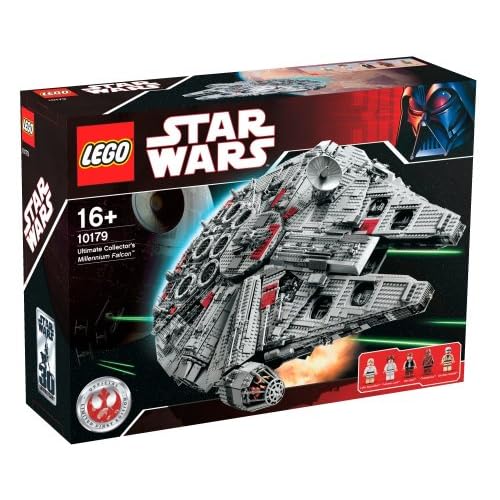
When I was a bright-eyed preteen, the sets seemed cheaper. The price of oil (and thus plastic) has gone up, so lets blame it on that. Anyway, I thought to myself, "I owned virtually every Star Wars set that Lego produced from '99 to '01 (minus the Slave 1 and Millenium Falcon, sigh). I could probably dig up the bricks and instructions and build this crap without spending a dime!"
And now it costs $3,100 on Amazon.


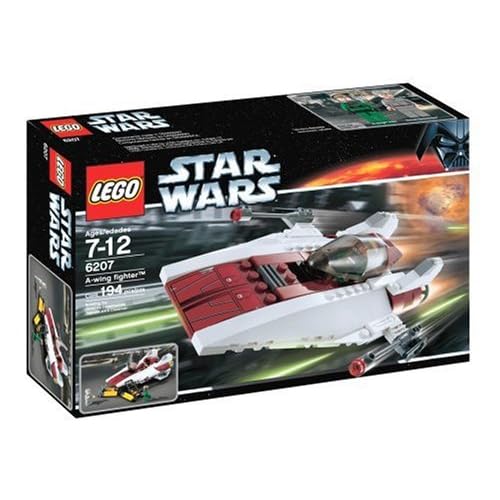
The reason I was working so hard to rationalize this to myself just then was because I was very tempted to pick up another X-Wing. They look REALLY good, and Lego has only gotten better at presenting the product on the box. If I were eleven, my wallet wouldn't've stood a chance. Thankfully I've gotten older and more stingy with my money. Just a little.

So I went home. Four days later, I took the plunge and dug out my stuff. Funny enough, my experience building this one little model gave me oodles of life lessons, morals and sage advice to hand out in the form of this blog. Heyo!

I have a lot of Legos. When we changed houses in 2001, most of my stuff was broken down and chucked into random boxes, bits flying at random. I seem to recall piecing everything back together, but it was never the same at this house. I pulled together everything I could from three different drawers in my closet and I still didn't have everything I needed. However, I DID find a thin stack of assembly instructions for some of my favorite models, including the Rock Raiders stuff that I adored. I found the A-Wing guide, but I didn't see more than five red bricks in the drawers, so that was out. I have no idea where my Y-Wing stuff went, so that's out. No X-Wing, no TIE, so it had to be the Snow Speeder.


Life lesson: The things you adore when you're eleven are not the same things you adore in your twenties. Lets see how I feel about video games when I'm forty.

There weren't only Legos on the drawers; there were some old Star Wars action figures, loads of rock-hard modeling clay, a shattered egg shell (my brother or someone owned an old Ostrich egg that didn't survive), and other bits and bobs that make their way into drawers. Before long I pulled out a trash can and threw away things as I went. Hmm.

Life lesson: I'm much more tidy than I was. I can't stand to see such gross disorganization in what's supposed to be a functional drawer. What's worse is some of the stuff is my brother's, which means it can't be thrown away easily (or can it?).

Construction began.

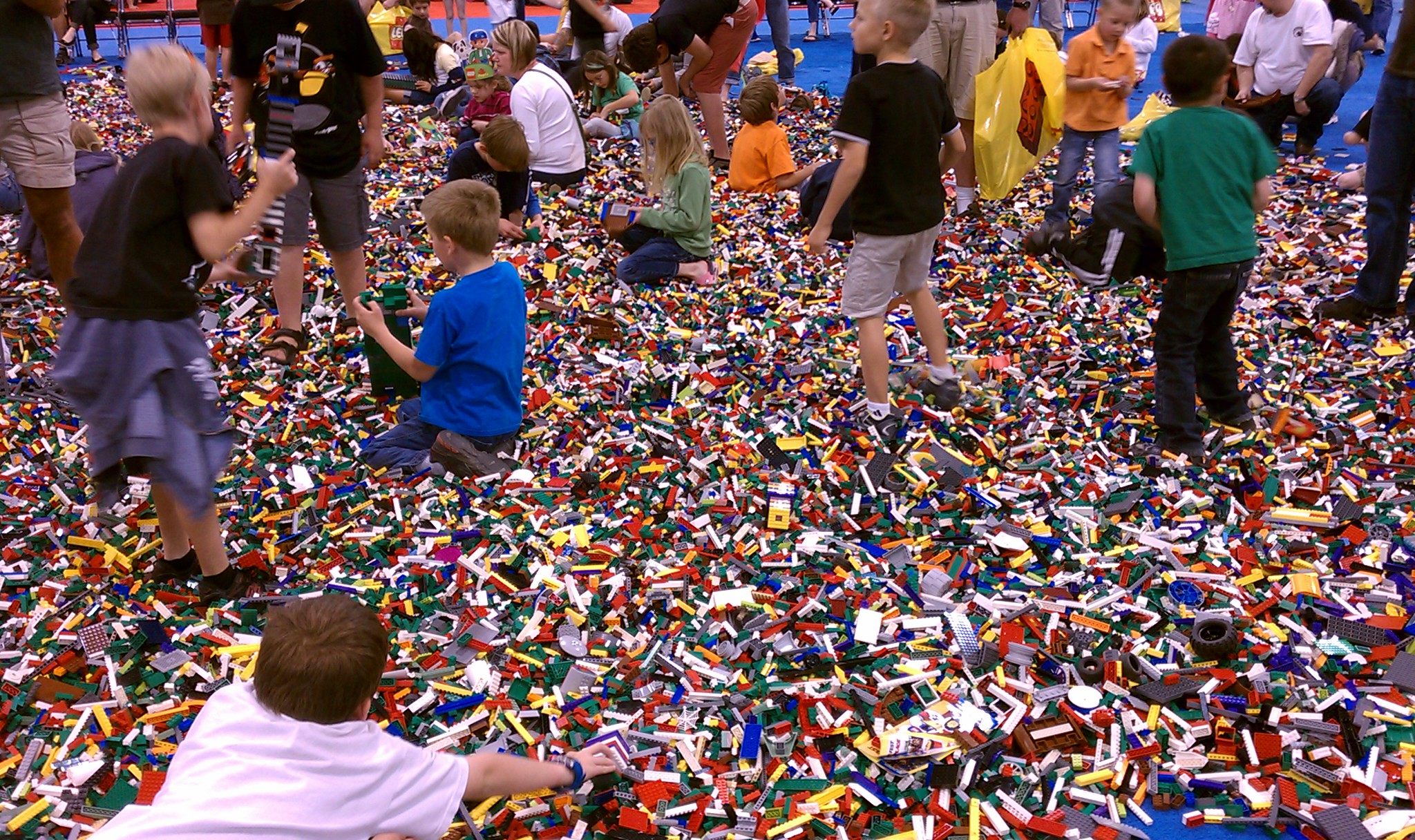
I didn't have all of the parts. I had enough to start a base, but it wasn't close to enough. Before long, I was pulling apart the part of the TIE that had survived and cannibalizing it for parts. Eleven-year-old William would NEVER do such a thing. Before long I had to pull a thirty-gallon tub of bricks from my little brothers' room to get enough. Sorting through that crap took forever. So I dumped it on the floor.

It hurts the knees after a time.


...And there was quite a mess. I was able to pick through the pile like a junkyard hobo, but it was slow going. Before long I realized I didn't have the patience to get the exact color of part, so I started going for Shape Only (and even that was pretty loosely followed). Thanks to both my experience with Legos and my inner crotchety old man, I don't tend to care when pieces don't match the instructions as long as everything fits together.

Life lesson: I'm not as particular as I used to be. I guess that not giving a crap about finicky little things comes with age.

The ship came together in about two hours. It's probably the longest assembly I've ever had in my life, simply because each part was a new journey to the junk heap. I almost gave up a few times but the end result was worth it; a slightly hodge-podge Snow Speeder with asymmetrical colored parts. In fact, I kind of prefer it this way. I've done enough creative writing to quickly justify the color scheme with a story about two Rebel fighters going down behind enemy lines and having to repair their ship with random scrap. I'd read that graphic novel.

Life lesson: The pursuit of perfection is fine when you have the time and inclination. Sometimes doing a lesser job is acceptable if you're happy with it. I'm not worried about other people's opinions of this one Lego thing. It's not a big thing in my life and it pleases me.


Thursday, September 6, 2012

You Want What You Can't Have

After watching the Hulu preview of NBC's Revolution, I was struck by something. No, not the fact that Revolution was only "okay" by TV pilot standards, but by a change in the psychology of culture, at least when it comes to science fiction.


Around the year 1900, the most exciting prospects of sci-fi were things like going to other planets and meeting aliens or using fanciful computer-like devices for day-to-day tasks. Jules Verne explored the farthest reaches of Earth itself, going to its very center and exploring its vast oceans (about 20,000 leagues down).

Of course, these days we still have such stories. Going to other planets is "old hat," and in any sci-fi movie like Riddick or Prometheus you can see some very sharp special effects depicting computers and space travel technology. We're (mostly) living in the future that writers from the turn of the last century predicted, albeit a much less glamorous one with many fewer spaceships. As some statisticians would tell you, we have more people living in urban areas than in the countryside these days, and so the imagination of modern culture itself has shifted somewhat to reflect that.


In other words, one-hundred years ago, people who lived in the country loved stories about technology. These days, while surrounded by technology, we dream of a time without it. We've seen a dramatic rise in the interest in zombies in popular culture. There are all manner of zombie games across every entertainment medium. There are movies, books and songs about them. This fascination isn't just with the idea of dead humans coming back to life: It's about changing the status quo. The apocalypse gives meaning to the lives of people who feel unfulfilled in their normal lives. There's a romanticized purity about growing your own food and making your own clothes, something that most people in first-world countries haven't and won't ever do in their lives. It's only interesting because it's something new to most people. It's the newness and unfamiliarity that makes it enticing. Never mind the harsher realities of starvation, sickness and fear that that kind of world entails.

Monday, June 18, 2012

The Importance of Hindsight

Rereading your old writing is a great way to see where you've come from. I recently found an old piece of writing called Kitty Ridgeland, a sequel to a terrible story I wrote around 2009 called the Bottomless Bag. In that story, I took the idea of the Bag of Holding from Dungeons and Dragons and put a whole universe into it. Two kids from our universe found their way inside and adventures ensued. One of the things they found was a deposed queen named Kitridge (sigh) whose experiments with staying young had left her aging younger and younger. She'd managed to stop aging around the age of fourteen. As you might imagine, at that age it would be very difficult to be taken seriously, so she left her homeworld and returned with the boys to Earth.


Here's the first important takeaway of learning from your past mistakes: Never assume that anything you've done is amazing or awesome. Even some published authors have terrible habits (or no skill at all). The moment you assume you've become the perfect writer is the moment you stop improving. Conversely, believing everything you've done is complete crap can be just as harmful, as you'll probably just stop writing out of frustation. Even with the awful writings of my twenty-year-old self to look over, I can see the kernel of an interesting idea. One day I might go back and write a short treatment of the Bottomless Bag and actually do a good job this time.


Anyway, the sequel followed the day and the life of queen Kitridge (renamed Kitty to fit in better, ugh) as she found her way in high school (double ugh). Originally I wanted her to exude the qualities of a deposed old queen; she was all bitterness and spite, and this came through in the way she treated other students. To put it bluntly, she was a cold hard bitch. I'm really not interested in reading stories like this anymore; maybe it's because I don't find the idea of difficult people fun like I used to. I'm not who I was when I was nineteen.


She had all of these weird magic skills. But then again, so did everyone else in the school. I was going for this strange Harry Potter-like world where magic was commonplace. Eventually, Kitty got in a (quite violent) fight with another one of the girls at school. There was a fun fight scene (posted below) and then things go very wrong for the girls when their magic sort of runs away with them, leaving them in a time-stuck world. I only got about seven or eight pages in before I ran out of ideas. This might've been because I was tired from forcing the Bottomless Bag story or because the universe wasn't as interesting to me as it had been. Either way, the story is left hanging. After reading it, I realized several things, and wrote them down in the text document immediately afterward. Here's exactly what I wrote:


As I reread through this long-forgotten story, several things surprised me. Kitty's character is quite strongly defined, but there are a few things I'd change:

1: She's kind of a bitch, and I don't enjoy reading stories about terrible people. I need to make her more sympathetic. She doesn't need to become some patron saint, but I can find the line between Nurse Ratchet and Snow White.

2: Although I was once extremely fascinated with fantasy stories, I now find them to be rather overdone. I think I'll change the story to science fiction instead. Instead of being from the previous story (which I'm removing any reference to), she can be a time traveler, an alien or something else I haven't thought of yet.

3: I'm not exactly sure what happens next, but it intrigues me. I vaguely recall the thought of having some kind of agency that exists in the moment between moments, but that seems contrived. Also, the little robot/alien boy who caused the accident seems interesting.

4: Instead of editing this story, it might be easier if I simply rewrote it completely.

5: The whole thing with Kitty being mean to that other girl simply has to go. There's no motivation for a person to be so cruel for no reason. Either give Kitty a reason to dislike the other girl or do something else.

6: How about we rename Kitty? I don't care for that name (thanks to That 70's show and Arrested Development).

There's lots here for me to work with, and it's interesting to see where I was in 2009. I hadn't even read Self Editing for Writers yet. Reading this old story lets me see the soul of my style. Despite the poor word choices and storytelling faux pas, I can see a story I was enthusiastic about. Now I know how to fix it and make better decisions in the way I tell this story. Hopefully in three years I'll look back at that and see that I've improved.

The fight scene between Kitty and Sarah:

Kitty experienced an explosion of white light as Sarah's fist collided with her right eye. Kitty grabbed Sarah by her hair and punched her in the neck. Sarah wheezed and clasped her throat, dropping to her knees. Before Kitty had time to wonder if she had really hurt her, she found herself knocked to the ground by a spell. She got to her feet just in time to see a cloud of X-acto blades emerge from the supply cabinet in the corner of the room and gather in a cloud over Sarah's head. Sarah was on her feet again and was crouching on the ground, holding both arms forward, as if she were directing the way for the blades to fly. Kitty ducked almost too late; the blades whipped over her head and cut several long grooves in her scalp before sticking in the wall behind her. Blood flowed in torrents down her face.
Kitty pushed back as hard as she could; there were suddenly so many spells in her head that she didn't bother sorting them out. She hurled lightning and wind along with Mr. Cropton's office chair at Sarah, who deflected them easily, retaliating with a wall of water and a volley of sharpened pencils, some of which stuck painfully into Kitty's face, arms and legs.
Now she was angry. She dodged around another group of spells and charged at Sarah, intending to punch and kick any part of her that she could get a hold of. Her plan failed when Sarah sent a solid wall of air that slammed into Kitty like a mattress and sent her toppling over backwards. She landed on her stomach, slightly dazed. For the first time in Kitty's life, the thought crossed her mind that she might not win.

Wednesday, April 25, 2012

Gone Fishin

Although this blog is on something of a hiatus, I'm still writing. In fact, I'm writing frequently. All of my new stuff is going to hubpages, where there's a small chance I'll get paid for my work. My stuff has less of a personal blog feel, and I've stripped down a lot of the language to make it more digestible to a wider audience.

My page on hubpages is right here.

This blog will still exist as just that: A personal blog. I'll still post here when I think of something with a more narrow focus than my Hub audience.

If you don't want to explore by yourself, here are some of my favorite articles I've written:

How I Created the Zombie Apocalypse

How to Become a Better Gamer

Earth Reborn Review

Wednesday, January 18, 2012

Runaway Train

I have friends who compare running RPGs to hanging onto the front of a freight train and trying to quickly lay down track before they derail completely. I find that this comparison is only true for people who are just starting out writing this type of game. After a few sessions, the GM will get better at writing stories that aren’t so rigid and strict. In fact, people smarter than I have written very informative articles on how to structure an adventure for maximum playability.

When I first started writing, I very much over-thought the whole process. I had a complicated array of if/then “switches.” Completing quest A would yield different results if the players had previously completed quest B, and still different results if they'd completed quest C and B together. In time I learned that I was exerting myself for no meaningful gain. Work smarter, not harder, as the saying goes. Anyway, wasn't this supposed to be fun? Programming a game in a word processor is laborious and draining. Many times, content was skipped completely, meaning that I'd wasted effort. Something had to change!

This is another big departure for regular writing vs. RPG writing; the fact that stuff can get skipped. Only in an author's wildest nightmares might a whole chapter get overlooked. So much character development and plot, gone. Just like that. How could a story retain its shape? How could you have a finale? What if somehow the finale was skipped? This is why RPG writers have to employ something called nonlinear writing.

It's not as strange as it sounds. If you've ever thought about the process of writing a script for a movie, it merits comparison.

A few years ago I was completely in love with the idea of becoming a big-shot Hollywood film director. Because my obsessions are a little more “advanced” than some people, I like to learn everything about something before I move forward. During my research (a fancy way of saying watching every “making-of” on every DVD ever made), I learned that most movies and television shows are shot completely out of sequence. That is, the script is carved up into discrete, filmable chunks and then shot out of order. Lord of the Rings is famously known (by me anyway) to have filmed the very last shot in the whole movie during the first few weeks of principle photography. The actors hardly knew each other at that point, and now they had to act as if they had just finished throwing the ring into the Crack of Doom.

"Was your name Shane or Sean?"
Like movies, it helps if the author can think of the story as a series of discreet scenes. Unlike movies, RPG scripts are not written as a whole and then carved up later. It's much easier to have a strong overarching narrative that connects separate “scenes” together into a whole. This way the players can visit the scenes in almost any order and still get a grip on the overall story. So what if they skip the fight with the cave troll that was supposed to happen early on? The GM can just make it come in later and use it for the last fight of the game. Problem solved.

Thursday, January 12, 2012

Movie Review: Cowboys and Aliens

As I have done in the past, I've decided to review a movie. To quote myself in my review of Daybreakers: “Perhaps the most prevalent and popular form of writing today is the kind we see in movies. While many people simply "hate books," nearly everybody watches movies.”


Cowboys and Aliens is a 2011 movie directed by the same guy who made both Iron Man films. It earned a 44% from Rotten Tomatoes, which means it's quite rotten. It also means that it's rated lower than Daybreakers (67%) but much better than 2005's Doom (20%).

Remember his name? I sure don't.
I like to think that the title of the movie was invented when a parent watched his children play with action figures. When I was a kid, I'm pretty sure I made Batman fight aliens. Maybe they'll make that into a movie!

On the surface, the film seems to offer everything I like about Summer movies: Action. Explosions. Harrison Ford. What went wrong? Films that mash up two genres are rare but not unheard of. According to this series of captioned photographs, “[Bladerunner was a] sci-fi and hardboiled film noir; Alien was a haunted house movie [in] outer space.” So it's not like this kind of thing is new.

The problem lies in the way the movie was created, it doesn't blend two films; it is two films. Like dysfunctional siblings, these two movies fight it out to be dominant almost the whole time. In the beginning, it's a fairly boring Western starring James Bond. Halfway through, there's a transition from Western into a pretty serious sci-fi flick. Then for the rest of the movie each genre ruined the suspension of disbelief for the other. Worse still, I got flashbacks of Krull.

If you're not familiar with Krull, watch this trailer.


Like most films with a bloated budget (Matrix 2 and 3, any Star Wars prequel), character development takes the backseat to what Hollywood executives would excitedly refer to as “the Action.” Unfortunately this means that there's no character development of any kind in the beginning of the movie. James Bond wakes up with no memory, so we as the audience are left to solve this “mystery” for ourselves as the film progresses. This is not a J.J. Abrams mystery that leaves the audience with an “I MUST KNOW” desire. This is a slow, plodding and ultimately unimportant side plot that seems to get in the way of the Action.

This explosion is more important than the characters.

In fact, this veiled "mystery" trickles down throughout the entire production (Spoilers ahead). Why are the aliens abducting people if they're only visiting earth to harvest gold? If Olivia Wilde is an alien who can take the form of a human, why can't the other aliens? Is she the last of her race? How come the Indians speak exclusively Chiricahua but can clearly understand English? Was this all an excuse to give Harrison Ford a Chewbacca-like Indian sidekick? Why do the aliens seem so evil?

In a weird twist of fate, the writers of the movie tried to make an ensemble cast of characters, but they don't take the time to develop any of them beyond an initial archetypical doodle, and this includes the main character.

The main character: Jake Lonergan, a mysterious amnesiac who turns out to be just an outlaw with James Bond's prowess for hand-to-hand combat.

Harrison Ford's character: A rich cattle rancher who learns something about himself through the eyes of a young boy while chasing down the aliens.

Olivia Wilde: A mysterious young woman who looks like she wears pajamas for the whole film.

The Preacher: A caricature of what Hollywood thinks ministers in the wild west were like, except he's both Catholic and Christian, but with some distinct humanist vibes.

...And three or four other people whose names you won't know until you read the credits on IMDB!

Probin' time.
This movie was basically a 1.5 million dollar Freddy Wong video, except without the fun Freddy Wong bits. Instead of watching this, watch True Grit and District 9, two much better films that do their genres justice.

The Good:
Great explosions, aliens, effects
James Bond's wrist gadget

The Bad:
The plot is boring
The movie is never as cool as the title made it sound
The characters are undefined and shallow as a hastily-dug mafia grave
The end was much like Krull
It didn't mash up the two genres well
This list of mistakes

Overall: 2/5

Tuesday, January 10, 2012

The Master is a Slave

This image is blatant pandering to
my sister in law

Continuing from my previous post, another thing that makes RPGs so different from board games is the notion of a Game Master. I realize that phrase might make some people shudder away in disgust and exclaim, “that's just too nerdy for me!” but I implore those people to continue reading anyway.

As far as I can think, there's nothing quite like having a game master (or GM) running the game. In video games the player is limited by the bounds of the game itself. If you walk to the furthest reaches of the map, you'll find an invisible wall that blocks the way. Books and movies are different because the reader or viewer is effectively on rails for the entire duration. The experience is passive instead of active. This doesn't make it better or worse; just different. The audience has no control of what does or doesn't happen on the screen; they're simply along for the ride.

Meanwhile, sitting at a table with a person who is the author, narrator, voice and personality of the characters is something to behold, especially if it's done well. If a player decides to travel to the farthest reaches of the planet, it's the GM's responsibility to have something suitably surprising waiting there for him to find. This is why I keep stressing the importance of imagination in games. If imagination is limitless, the world is limitless.

Now you can start to see where the difficulty of creating this kind of game can be. In a previous blog I mentioned that RPGs come in books. Most of the time a portion of the book is devoted to explaining the world (also called a “setting”). Essentially a setting is an elaborate list of Do's and Don'ts. A setting could take place in the Wild West, except with strange and grungy magic. It could be like Men in Black. It could be based on My Little Pony.
This guy knows what I'm talking about.
However, people are wild and unruly creatures who desire above all things to get their own way. This was one of the first things I learned when I jumped headfirst into running my first game. It can be frightening; I had spent hours trying to anticipate what a group of three players might do inside a single tavern. Within two minutes of playing they were already doing things I hadn't thought of. This is something I think every writer should experience just once; people like to break things. Look at what happened within a few weeks of the new Star Wars game coming out; people got inside the game and found ways to break it, giving themselves an advantage.

You see, when a person sits down to write a story, they have time to ponder and caress their words and characters. They can carefully sketch and sculpt their style and narrative to suit a certain purpose. This is one of the reasons it takes so long to write things. Compare this to RPGs, where the writer can prep as much as they want but still be fairly unprepared for the game. It doesn't matter how much time an author spent describing the perfect woman; when suddenly asked by a player if she's ever killed a man, all preconceived ideas are quickly called into question and the author has to stop and think. It's this very unpredictability that makes the game both a blessing and a curse.

Saturday, January 7, 2012

A New Year, A New Topic

I was recently asked if I was going to continue writing on this blog. “Of course,” I said. “Why wouldn't I?”
“Oh,” replied my sister, “because you haven't updated in a long time. I was wondering if you'd just abandoned it.”
“But I'm not writing anything,” I said, “except maybe adventures for our roleplaying games.”
“Why don't you just write about those?” she asked. It was a good question. Why don't I?

It's not like my content would change much. Devout readers will remember that I like writing about sci-fi and fantasy. It's not a surprise to hear that all of my gaming sessions are based in similar universes (that is, either fantasy or zombie mayhem, which is kinda sci-fi-ish). I've written two (crappy) novels that were set in a comfortable place between the two genres, but I hesitate to call it Science-Fantasy because another guy has basically defined that genre as something else altogether.

This is more my speed; bizarre.
But where should I start with a blog about roleplaying? There are already several blogs devoted to the mechanics of RPGs, and other still devoted to nothing but adventure creation. I don't really want a blow-by-blow account of a night's events, as I typically find those uninteresting. Because this blog is supposed to be my way of helping random strangers overcome writing hurdles, I think it'd be best if I covered the things I do from the perspective of an aspiring writer. Hopefully this will broaden the appeal of such a blog, ensuring that it can be read by people who might not care much about this kind of entertainment, but also by those who do.

Topic 1: What the eff is a roleplaying game?

Around December of 2010 I was regularly meeting with some friends from math. You can read the account for yourself in more detail. Long story short, I wound up trying to create and run a system of my design (read: poorly conceived) and play a rudimentary adventure with my friends. Well, most of those math friends only lasted as long as the class itself, so at the end of the semester I found myself writing stories for some new players, most of whom were directly related to me.

A few months and one systems change later, I found myself slightly more experienced with this kind of game. I had played board games in the past but I had never been a huge fan (note: this opinion has changed significantly since July 2011, but that's a topic for another blog).

To say that a roleplaying game is like a board game is to do them both injustice. Board games have very clear-cut rules and goals, and typically one player wins. They're made to appeal to a fairly broad audience; they're play-tested rigorously before production, which itself can be expensive. Roleplaying games are typically based around a system of rules, which can vary wildly depending on preference. They're written by one or more people, they're also play-tested, but these games are mostly distributed as a book of rules. There are no boards to print, no cards to make, no wooden chips or bits to include in a box. Some people are baffled by RPGs for this reason; if a board game comes in a box, then how can a roleplaying game come in a book?
Almost every game here is terrible.

So what exactly is a "system?"

Similar to how there are many different makes and models of automobile in the world, there are numerous roleplaying game systems. If I drive a Chevrolet and you drive a Toyota, we're both driving places but we're getting there with a different style. The feel of the cars might be different; the shape of the seats and the layout of the air conditioning controls might vary, but ultimately we're both driving cars. 

To continue the analogy, imagine that while you're driving your Toyota, I'm actually driving a completely different kind of vehicle. For instance, a train or airplane. Hopefully now you can start to understand the difference between the Dungeons and Dragons system and something more obscure. For instance, Savage Worlds .

The reason the game comes in a book instead of a box is because most of the game is about imagination. But how is that any fun? Some people think the idea of playing with their imagination is childish and stupid. Perhaps it is, but only as long as they're imagining childish and stupid things. The word imagination (like many other words) has suffered from Disneyfication; when people hear the word "imagination" they hear it in either a mysterious Sleeping Beauty Narrator kind of voice, or Ms. Frizzle shouting "use your imagination, kids!"

Ugh.

The first thing a you need to realize is that imagination can be a very dark and powerful thing. If you've ever read a book then you were subject to some degree of imagination both on the part of the author and from your own mind. Whether your were reading the driest and most boring narration of 15th century European history or the most exciting moments of the Lord of the Rings. Imagination is a part of your life whether you know it or not: If someone asks you what you're thinking of having for dinner, you'll probably look forward into the future with your imagination to see what you might eat. "What sounds good?" really means "what do you imagine yourself eating tonight?"

I googled "imagination"

Imagination isn't complete fabrication, either. When you're thinking, you're really pulling on every experience, conversation and memory in your life, usually with the most recent stuff floating to the surface.

With this in mind, I present you with the most simple explanation of why the heck anyone would waste their time playing a game like this. Essentially the game is one long string of hypothetical scenarios. If I said to you, "imagine that right now, while you're sitting in front of your computer, you look up and see a strange person standing in your doorway. The person is holding a knife and looks murderous.

What would you do?"

I'm not even sure they're playing a game. Looks like a really
terrible family reunion in the heart of the 90's.
Of course not every scenario is so dire, but these kind of scenarios are used frequently, even in things like employee training. This is nothing new to most people. So why is there such a jump in perception when I call something a hypothetical scenario versus when I call something a roleplaying game? A negative stigma brought on by horror stories of kids who killed themselves after playing D&D? The fact that the players of these kinds of games are typically really dorky? 

The fact is that tabletop RPGs are still fairly unpopular in the eyes of the mainstream, played only by an obscure underground of people. It's not all number crunching and funny voices; it's one writer creating a space for players to answer questions to hypothetical scenarios. It's this writing aspect that interests me the most.