Sunday, August 11, 2013

How I Got Into Board Games

I don't understand these dice at all
If you've talked to me in the last three years you'll know that I've become something of a board game evangelist. At this point, I've stopped being embarrassed when people curl their lip at me and say, "wait, you play board games?"
"Yes," I reply, "this isn't Monopoly or Risk. In this one we play crime lords fighting for control of an entire city!"
Sometimes that person walks away with disgust. Sometimes they'll actually sit down with the slow caution of a deer who suspects a hunter is watching them from the woods. Other times they'll simply stand nearby and watch, arms crossed in a skeptical fashion.

I was like that too, once.

It was fall 2010. The biggest movie of the year was Toy Story 3. I made friends with a guy named Keith in a college math course because of our common interest in video games. A few weeks into the course, he was invited to game night by one of the girls from our class, and he invited me.

The game nights were held once a week, on Tuesdays. Typically we'd meet up at 9pm, drink coffee and play silly party games like Scattergories or Cranium. It was a nice way to unwind while listening to cable TV radio stations and occasionally playing charades.

One night I was suffering from terrible insomnia and I had a surge of creativity. I started creating a D&D adventure. It involved traveling into a cave and later, slaying a dragon. Since I had never actually played that kind of game before, I designed the adventure literally room by room in my head. Each room had one specific solution to get through it. In many ways it was much like a video game. The next morning I wrote down everything and took the printed adventure to game night that week.
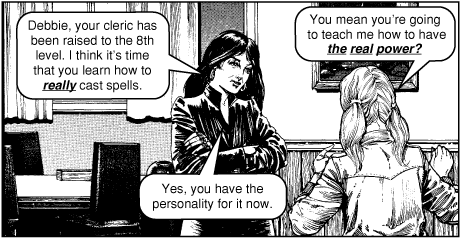
Much to my relief, no demons were spawned during the game.
The results were... unexpected. Nothing went as I had planned, the players made silly characters ranging from a Warrior Assassin based on a Resident Evil character, to something called the Candy Queen. I was not prepared, but we were all entertained.

At that time, I went kind of RPG crazy. I began researching the heck out of “real” dungeon and dragons and designing great adventures to play with Keith and the girls. Sadly the game night group fell apart when the semester ended, so those plans fell through.

A few months later, Keith invites me to another game night. This one is all guys in their early 30's, two of whom are either engineers or engineering students.
“Are we going to play D&D?” I asked Keith over the phone.
“No,” he said, “we're gonna play a board game that's kinda like D&D.”
Pshaw, I thought. A board game! What was I, ten years old? The last board game I could remember playing was Clue Jr!

...To be fair, Clue Jr. was pretty awesome
But I went anyway. I ducked my head as I entered the tiny apartment. The game was spread out on a table almost too small to hold it. The graphic design was terrible, the cardstock was yellowed with age. The illustrations laughably poor.
“How old is this game?” I asked with the worried expression of a man in over his head.
“It's from like, 1989,” said the game's owner around a mouthful of Chinese food, “I've had it since I was little.”

“Oh,” was the reply. With colossal apprehension, I took a seat. Keith handed me a deck of Wizard cards and said, “pick your spells.”

It was a watershed moment.


The game was called HeroQuest, and it would ultimately change my life.

The game has each player going around opening rooms, killing monsters and collecting treasure. I had a terrific time.

It was a Grinch heart-growing moment: Maybe board games weren't boring. Maybe RPGs weren't the only way to have fun at a table.

When I got home late that night, I looked online to find the game and found it cost $200. Two hundred. Apparently it was very old, slightly rare and quite popular. I also found out that, holy crap, there was a huge community of people who loved this silly little dungeon game.


Very soon after that, a website started called Shut Up and Sit Down. It was created by two British guys who made quite entertaining videos explaining exactly why you should be excited to play board games. Because of them, I bought my first two games; Citadels and the Resistance. Two very different card games.

I found it was quite easy to talk people into playing card games. Easier than, for instance, RPGs. I still loved playing RPGs, but it was just so much easier to throw a card game out there and play it. I didn't have to prep anything. It was a breath of fresh air.

So RPGs kind of faded away. Another group of friends sprang up and we had a regular board game night, this time with much less focus on RPGs One summer, I was a camp counselor and found out there were lots of people in my church who wanted to play board games. Strangely, they acted like it was some terrible secret, like a dead body in their freezer. So I asked a few people if they wanted to play board games (and later) RPGs. They jumped at the chance.

So here I am, still researching games every day. I've long since moved on from any official Dungeons and Dragons product, but I still enjoy Savage Worlds and more recently, Star Wars: Edge of the Empire. When I see people turn up their nose, I know what they're feeling; that familiar dread of being glued to a table, forced to play some boring thing like Candy Land.

Where we're going, we don't need Candy Land.

Wednesday, March 6, 2013

Life Lessons from LEGO

While visiting Target the other day, I always make an effort to swing by the Lego isle. I took a look at the newest Star Wars stuff, because Star Wars Lego sets were my favorite when I was growing up. This time I noticed the price tag on some of these things. The small sets start at twenty dollars, while the bigger stuff can get as high as seventy to one hundred U.S. dollars. I was floored.

Begone, vile temptress!


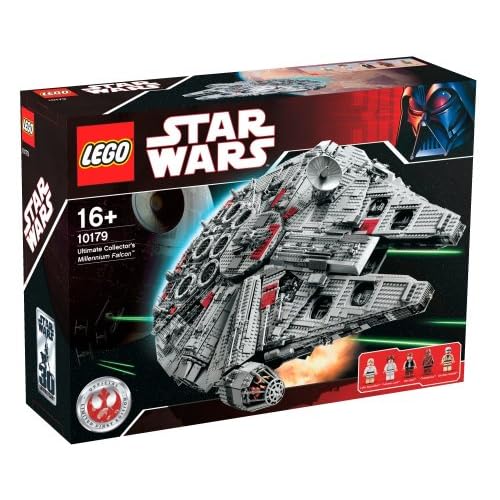
When I was a bright-eyed preteen, the sets seemed cheaper. The price of oil (and thus plastic) has gone up, so lets blame it on that. Anyway, I thought to myself, "I owned virtually every Star Wars set that Lego produced from '99 to '01 (minus the Slave 1 and Millenium Falcon, sigh). I could probably dig up the bricks and instructions and build this crap without spending a dime!"
And now it costs $3,100 on Amazon.


The reason I was working so hard to rationalize this to myself just then was because I was very tempted to pick up another X-Wing. They look REALLY good, and Lego has only gotten better at presenting the product on the box. If I were eleven, my wallet wouldn't've stood a chance. Thankfully I've gotten older and more stingy with my money. Just a little.

So I went home. Four days later, I took the plunge and dug out my stuff. Funny enough, my experience building this one little model gave me oodles of life lessons, morals and sage advice to hand out in the form of this blog. Heyo!

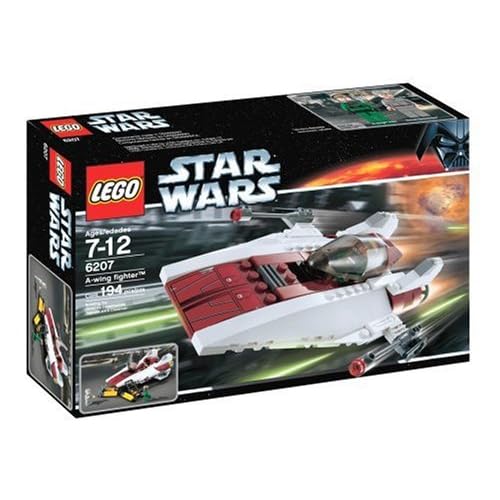
I have a lot of Legos. When we changed houses in 2001, most of my stuff was broken down and chucked into random boxes, bits flying at random. I seem to recall piecing everything back together, but it was never the same at this house. I pulled together everything I could from three different drawers in my closet and I still didn't have everything I needed. However, I DID find a thin stack of assembly instructions for some of my favorite models, including the Rock Raiders stuff that I adored. I found the A-Wing guide, but I didn't see more than five red bricks in the drawers, so that was out. I have no idea where my Y-Wing stuff went, so that's out. No X-Wing, no TIE, so it had to be the Snow Speeder.


Life lesson: The things you adore when you're eleven are not the same things you adore in your twenties. Lets see how I feel about video games when I'm forty.

There weren't only Legos on the drawers; there were some old Star Wars action figures, loads of rock-hard modeling clay, a shattered egg shell (my brother or someone owned an old Ostrich egg that didn't survive), and other bits and bobs that make their way into drawers. Before long I pulled out a trash can and threw away things as I went. Hmm.

Life lesson: I'm much more tidy than I was. I can't stand to see such gross disorganization in what's supposed to be a functional drawer. What's worse is some of the stuff is my brother's, which means it can't be thrown away easily (or can it?).

Construction began.

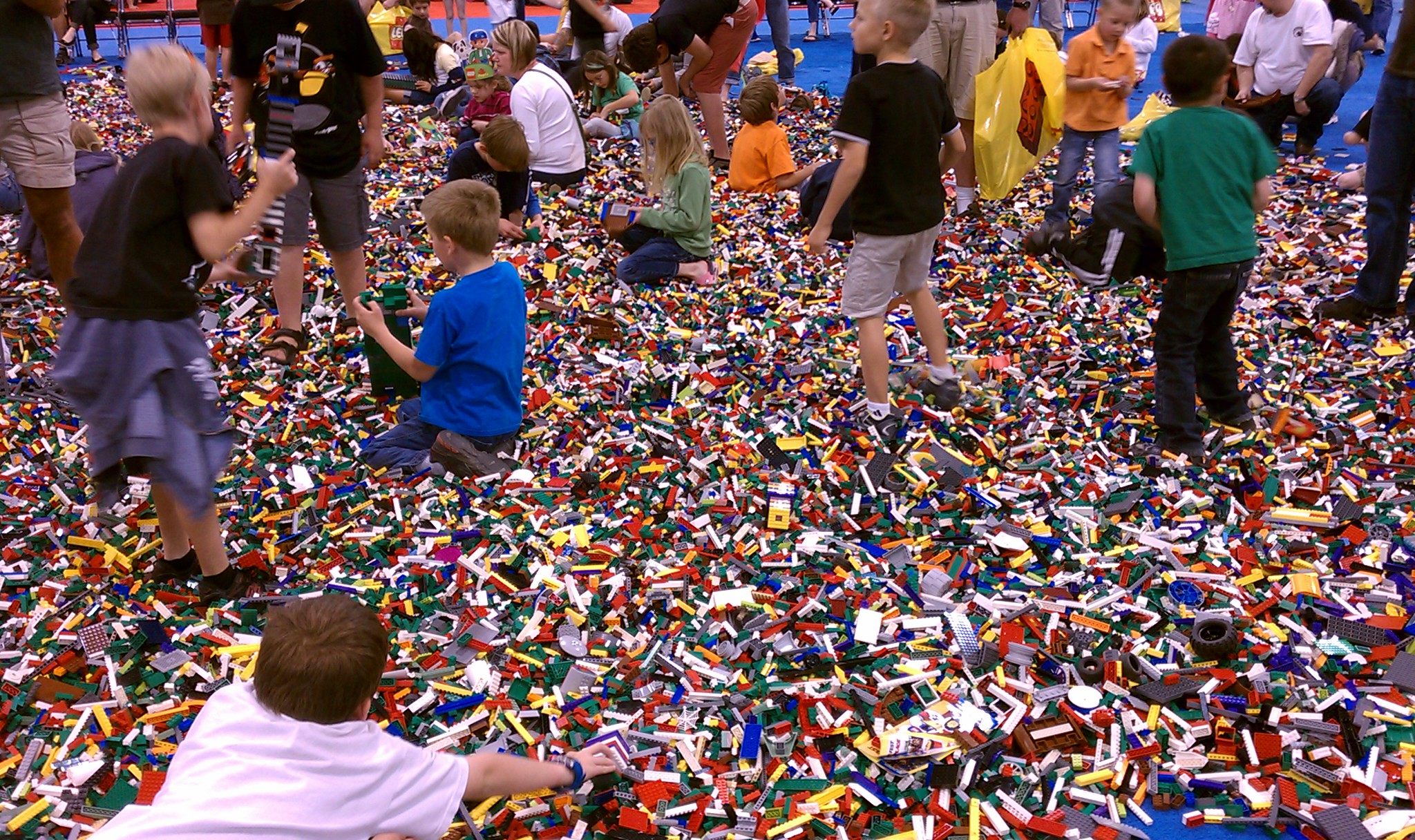
I didn't have all of the parts. I had enough to start a base, but it wasn't close to enough. Before long, I was pulling apart the part of the TIE that had survived and cannibalizing it for parts. Eleven-year-old William would NEVER do such a thing. Before long I had to pull a thirty-gallon tub of bricks from my little brothers' room to get enough. Sorting through that crap took forever. So I dumped it on the floor.

It hurts the knees after a time.


...And there was quite a mess. I was able to pick through the pile like a junkyard hobo, but it was slow going. Before long I realized I didn't have the patience to get the exact color of part, so I started going for Shape Only (and even that was pretty loosely followed). Thanks to both my experience with Legos and my inner crotchety old man, I don't tend to care when pieces don't match the instructions as long as everything fits together.

Life lesson: I'm not as particular as I used to be. I guess that not giving a crap about finicky little things comes with age.

The ship came together in about two hours. It's probably the longest assembly I've ever had in my life, simply because each part was a new journey to the junk heap. I almost gave up a few times but the end result was worth it; a slightly hodge-podge Snow Speeder with asymmetrical colored parts. In fact, I kind of prefer it this way. I've done enough creative writing to quickly justify the color scheme with a story about two Rebel fighters going down behind enemy lines and having to repair their ship with random scrap. I'd read that graphic novel.

Life lesson: The pursuit of perfection is fine when you have the time and inclination. Sometimes doing a lesser job is acceptable if you're happy with it. I'm not worried about other people's opinions of this one Lego thing. It's not a big thing in my life and it pleases me.


Thursday, September 6, 2012

You Want What You Can't Have

After watching the Hulu preview of NBC's Revolution, I was struck by something. No, not the fact that Revolution was only "okay" by TV pilot standards, but by a change in the psychology of culture, at least when it comes to science fiction.


Around the year 1900, the most exciting prospects of sci-fi were things like going to other planets and meeting aliens or using fanciful computer-like devices for day-to-day tasks. Jules Verne explored the farthest reaches of Earth itself, going to its very center and exploring its vast oceans (about 20,000 leagues down).

Of course, these days we still have such stories. Going to other planets is "old hat," and in any sci-fi movie like Riddick or Prometheus you can see some very sharp special effects depicting computers and space travel technology. We're (mostly) living in the future that writers from the turn of the last century predicted, albeit a much less glamorous one with many fewer spaceships. As some statisticians would tell you, we have more people living in urban areas than in the countryside these days, and so the imagination of modern culture itself has shifted somewhat to reflect that.


In other words, one-hundred years ago, people who lived in the country loved stories about technology. These days, while surrounded by technology, we dream of a time without it. We've seen a dramatic rise in the interest in zombies in popular culture. There are all manner of zombie games across every entertainment medium. There are movies, books and songs about them. This fascination isn't just with the idea of dead humans coming back to life: It's about changing the status quo. The apocalypse gives meaning to the lives of people who feel unfulfilled in their normal lives. There's a romanticized purity about growing your own food and making your own clothes, something that most people in first-world countries haven't and won't ever do in their lives. It's only interesting because it's something new to most people. It's the newness and unfamiliarity that makes it enticing. Never mind the harsher realities of starvation, sickness and fear that that kind of world entails.